Big O notation of your app
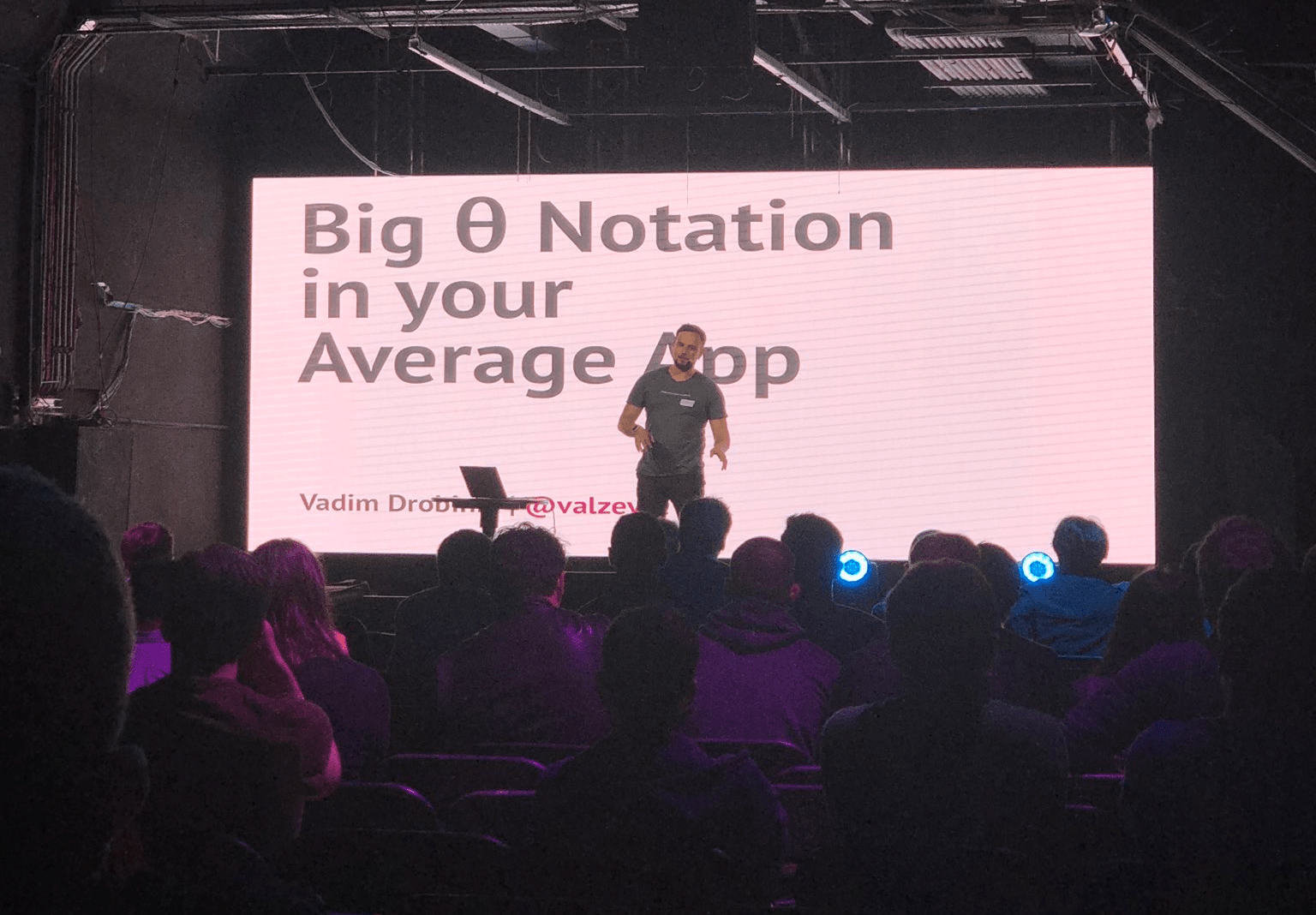
Even though you probably spent 5 years studying Computer Science and extensively using asymptotic notation, the truth is in the mobile development world there is a common myth about running time and space requirements being useless.
Modern devices are way more powerful for users to notice a difference between bubble sort and merge sort. Or not? Should everyone know how to implement Ukkonen's algorithm if they develop a weather app? What's the "Big O" of your average app and how to determine it?
I have answers to these questions and by the end of the talk you will have them too.
What is this talk about?
Whether Big O matters in everyday iOS apps: can users feel the difference between bubble sort and merge sort on a modern iPhone, and how do you estimate the complexity of your own app?
Why does the deck say Big θ instead of Big O?
Because the difference is the first thing the talk untangles: Big O is an upper bound, Big θ pins the growth rate from both sides - and the Sieve of Eratosthenes makes the distinction concrete.
Which real app problems does it analyse?
Storing data from an API, a path-finding algorithm for drawing connections, snapping an object to the nearest edge, and geohashes for faster local storage - everyday features with a measurable complexity behind them.
Is there a recording?
This page has the London slide deck in the resources section; for a full recording, the NSSpain 2020 edition of the same talk has one embedded on its page.
When an app is slow or crashing in production, this is what I get hired to fix - Instruments traces included.
App Performance & CrashesSimilar Talks
Modern devices are way more powerful for users to notice a difference between bubble sort and merge sort. Or not? Should everyone know how to implement Ukkonen's algorithm if they develop a weather app? What's the "Big O" of your average app and how to determine it?
The second part of a thorough introduction into iOS Security, from various pentesting techniques, to possible flaws to use-cases and tools.
Debunked the "iOS is secure by default" myth in 90 minutes. Walked through real pentesting techniques, tools, and war stories from the security trenches.
What teaching iOS at a Russian university taught me about learning. Turns out developers and nomads have more in common than you'd think — we both carry only what we need.